
Structural Adhesive Film Aerospace Selection and Buying Guide
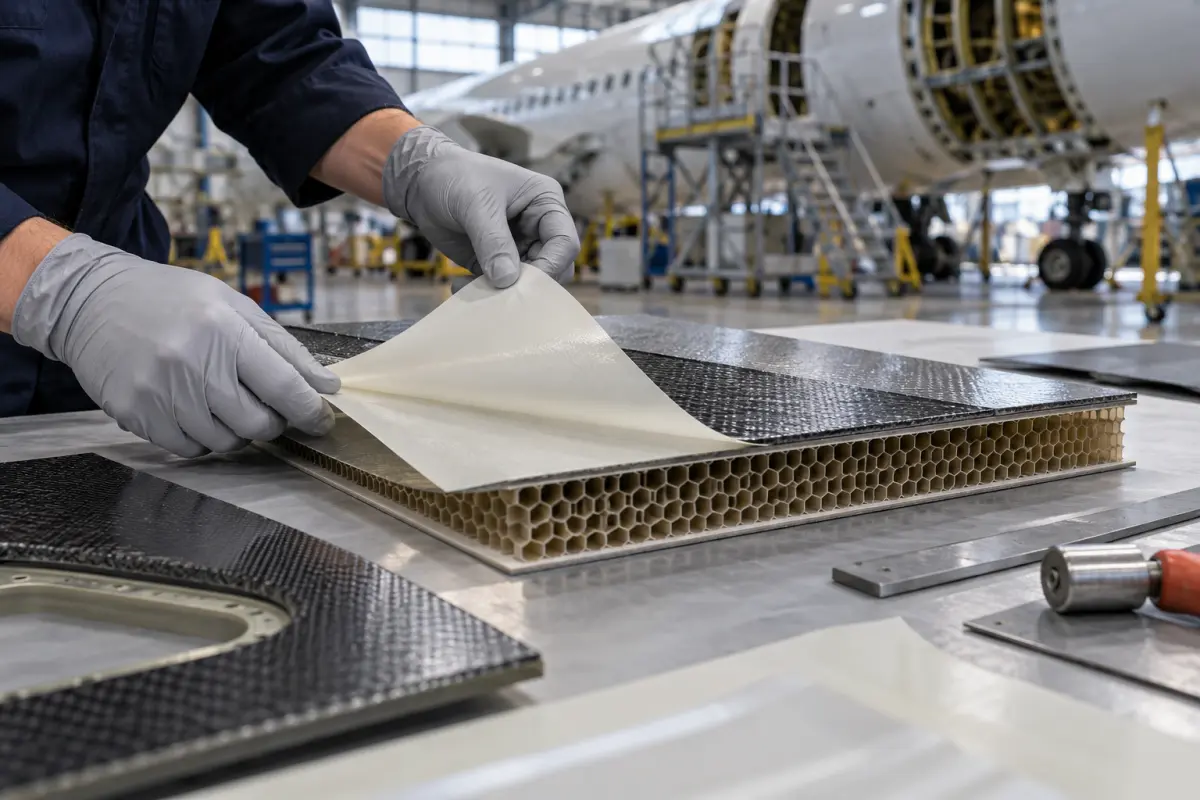
Structural adhesive film aerospace applications use a preformed adhesive layer to bond aircraft materials, including solid panels and honeycomb sandwich constructions. Unlike a dispensed paste, film provides a controlled, continuous layer that can be cut and positioned before bonding. Selection depends on the approved part number, the materials and joint design, and the required processing conditions.
Key Takeaways
- Structural adhesive film is supplied as a preformed layer rather than mixed and dispensed at the point of use.
- Film format helps place adhesive over broad bond areas, including panel and sandwich constructions.
- Similar-looking part numbers are not interchangeable; request the exact suffix and configuration.
- Procurement should confirm the required documentation, packaging and handling conditions before ordering.
What Structural Adhesive Film Does in Aircraft Bonding
A structural adhesive transfers loads between bonded materials as part of an engineered joint. In film form, the adhesive is supplied as a sheet or roll that can be cut to match a bond area and placed between prepared surfaces. This format is useful when a broad area needs a consistent adhesive layer, rather than a bead applied along an edge.
Aircraft bonding can involve solid panels or sandwich constructions in which face sheets are bonded to a lightweight core. The adhesive must suit the materials, joint geometry and manufacturing or repair process. Film selection is therefore more specific than simply choosing an adhesive described as strong: the film must also fit the planned layup and bonding method.
For example, CraftJetAero lists 3M Scotch-Weld AF163-2K-0.06 adhesive film for solid panel and honeycomb sandwich construction. That application description is a starting point for identifying a candidate, not a substitute for checking the exact configuration called out by the job documentation.
Film Versus Liquid or Paste Structural Adhesives
The format affects how technicians place adhesive and how buyers specify it. Film is preformed for placement across an area. A liquid or paste adhesive is dispensed and may be better suited to a joint where the adhesive must be applied locally or fill an irregular space. Neither format is a universal replacement for the other.
| Selection point | Structural adhesive film | Liquid or paste structural adhesive |
|---|---|---|
| How it is placed | Cut and positioned as a preformed layer | Dispensed onto the intended bond area |
| Typical geometry to evaluate | Broad, accessible mating surfaces | Localized or less regular application areas |
| Procurement detail to confirm | Exact film part number, configuration and supplied form | Exact adhesive part number, package and dispensing requirements |
| Process question | How will the film be positioned and bonded? | How will the adhesive be mixed, dispensed or shaped? |
For a practical contrast, a technician bonding a panel over a defined area may need a film cut to the layup shape. A task involving a void or an irregular bonding area may instead call for a different adhesive format: the listed 3M Scotch-Weld EC-3587 B/A structural adhesive, for instance, is described for filling voids and adhesion to metal and plastic. Those descriptions identify different product uses; they do not establish that either product is approved for a particular aircraft task.
How to Compare Film Part Numbers Without Guessing
Start with the complete manufacturer part number, not only a familiar product-family name. A family can be offered in multiple weights or configurations, and a suffix may distinguish the item required by a drawing or purchasing record. Do not interpret a number in a suffix as a film thickness, weight or other property unless the manufacturer’s identification data confirms it.
CraftJetAero lists AF163-2U-0.015 epoxy adhesive film as a thermosetting modified epoxy film for solid panel and honeycomb sandwich constructions. Its listing describes a 90-minute cure at 225°F and performance across a stated temperature range of −67°F to 250°F. These are details associated with that listing, not values to apply to another film configuration or an aircraft repair without verification.
A buyer comparing AF163-2U-0.015 with AF163-2K-0.06 should therefore record both complete identifiers and request confirmation of the attributes relevant to the order. The shared AF163 designation alone does not show that the two items have the same construction, processing requirements or permitted use.
- Identity: Confirm the full part number, manufacturer and any stated configuration.
- Form: Confirm the supplied film format and dimensions needed for the job.
- Process: Identify the bonding method and any processing information the engineering team requires.
- Records: State the documentation and traceability requirements on the purchase request.
Information to Put on a Purchase Request
A useful request lets a supplier identify the item without inferring technical requirements. Include the complete part number and quantity first, then specify the required format, dimensions and documentation. If an alternate is acceptable for review, say who will evaluate it; do not leave substitution to an assumption based on a similar product name.
For example: “Please quote 3M Scotch-Weld structural adhesive film, part number AF163-2K-0.06, quantity as stated on our purchase request. Confirm the offered part number, supplied form, available product documentation and any stated storage or handling conditions. Do not substitute another configuration without our engineering review.” This wording identifies the requested item while keeping technical acceptance with the buyer’s responsible team.
It also helps to distinguish the adhesive from adjacent materials in the work package. A bonding job may call for separate preparation or finishing materials, but those items should appear as their own line items. Buyers sourcing related materials can browse CraftJetAero’s aviation chemicals category rather than assuming one adhesive listing covers the entire process.
Checks Before the Film Reaches the Work Area
Ordering the right identifier is only one part of a usable procurement record. Receiving and stores personnel need enough information to compare the delivered item against the purchase order and route it under the required handling conditions. Recording these needs before purchase can prevent an otherwise correct part number from arriving without information the maintenance team expects.
- Match the manufacturer and complete part number on the offer and delivered label to the purchase request.
- Check that the supplied form and dimensions meet the planned cut pattern or layup needs.
- Request the documentation specified by the buyer’s quality and maintenance procedures.
- Communicate any applicable storage, handling and issue-to-work-area requirements to receiving personnel.
Use the manufacturer’s current data sheet and the applicable aircraft maintenance documentation for surface preparation, storage, processing and use. Confirm required approvals and airworthiness before installation; a catalog description or a comparison in this article does not authorize a substitution or establish suitability for a particular aircraft.
Sourcing from CraftJetAero
Buyers can request a quote from CraftJetAero by part number. Include the complete identifier, quantity, required form and documentation requirements so the request can be evaluated against the intended item.
Frequently Asked Questions
What is structural adhesive film in aerospace?
It is a preformed adhesive layer used in an engineered bond between aircraft materials. Film can be positioned across a defined bond area before the bonding process.
Is adhesive film the same as a paste structural adhesive?
No. Film is supplied as a layer for placement, while paste is dispensed; the required joint design and process determine which format is appropriate.
Can two films in the same product family be substituted?
Not on the basis of the family name alone. Compare complete part numbers and configurations, and route any proposed change through the required engineering review.
Does a part-number suffix tell me the film thickness?
Do not assume it does. Use the manufacturer’s identification data to establish what each element of a part number means.
What should an MRO buyer include in a film adhesive RFQ?
Provide the complete manufacturer part number, quantity, required supplied form and dimensions, and documentation requirements. State whether proposed alternatives may be submitted for review.